Sunday, September 28, 2025

House Rules, Part Three: Combat, Currency, and Equipment

      I've endeavored to keep house rules for combat and gear to a minimum. The sole rule addition to combat is drawn from Pendragon, a now-distant cousin to Dragonbane/Drakar Och Demoner. As for additional gear, I intend to keep a tight rein on any additions to prevent any kind of arms race from developing in this game.


Falling Unconscious and Getting Knocked Down (Pendragon)

           © 2015 Dean Spencer, used w/permission.          

     If a character's Hit Points drop to 1/4 or less than 1/4 their total, they must make a WIL check to rally (per the rules on p.50 of the rulebook) but without the Bane associated with Death Rolls. Another character as close as 10 meters away (and within earshot) can try to use persuasion to help you rally.
 
     A character who takes damage equal to or greater than the higher of their STR or AGL must make an AGL check or risk being knocked down. Prone characters are, of course, subject to the rule of prone targets on p. 45 of the rulebook. (Note: This is adapted from Pendragon.) 


Publisher's Choice Quality Stock Art © Rick Hershey/Fat Goblin Games
Currency in Terrenor

     Humans in Terrenor adhere to the monetary system as presented in the Dragonbane core rules (which is also the monetary system of the Republic of the Harav). Dwarves and elves, however, have their own unique currencies which may or may not be valued by neighboring cultures. Dwarves typically do not use gold and silver as coinage, substituting steel and iron respectively as these are seen as the lifeblood of their existence. The only precious metal dwarves use as coinage is copper. Among themselves, elves substitute shaped, polished, and engraved pieces of amber and tree bark for silver and copper, respectively. They do mint their own gold coins, however. Other kin (halflings, catfolk, et.al) trade in almost any coinage available.

     Typically, Veraxians value Haravian coins at half the Veraxian value (this is mainly due to their prejudice, not the weight of the coins or the purity of their metal). Likewise, Veraxians do not value dwarven steel and iron or elven wood or amber pieces – they arrogantly consider such currency worthless. Precious metal coins (gold, silver, copper) used by demihumans are valued at half their value as well. In the Borderlands and the Republic of the Harav, no distinction is made between Haravian and Varaxian gold coins, so one gold piece is one gold piece, per the rulebook.
 
                           CP/Fl       SP/Ir/Am       GP/St                           CP     SP      VC     HG
CP/Fl                      1                10             1/100                 VC     200     20       1         2
SP/Ir/Am               10                 1              1/10                  HG     100     10      .5         1
GP/St                  100               10                1
  • 1 copper piece (CP) = 1 elven floren (Fl)
  • 1 silver piece (SP) = 1 dwarven iron piece (Ir) = 1 elven amber (Am)
  • 1 gold piece (GP) = 1 dwarven steel piece (St)
  • 1 Veraxian Crown (VC) = 2 Haravian Guilders (HG)
 

Additional Gear, Weapons and Armor (Multiple Sources)

     Just about any number of third party resources have new pieces of adventuring gear featured in an article or as part of a new setting. These should be run by the GM for approval before being included in a character's inventory. Additional rules for and types of weapons and armor can be found in the supplements Expanded Rules for Armor and Expanded Rules for Weapons. Items and rules in these books will be considered as necessary by the GM and are not available to starting characters without GM permission.
 

Black Powder Weapons (Multiple Sources)

     Ah, now we come to the sticky wicket of many a fantasy campaign. One which has afflicted gamemasters with endless nightmare scenarios and migraines. Historical settings such as A Mighty Fortress for AD&D 2e, as well as grimdark fantasy games, like Warhammer Fantasy Roleplay, feature black powder weapons in all their destructive and powergaming glory. Dragonbane is no exception, but there are some nuances to how black powder and black powder weapons feature in Terrenor.
 

           © 2015 Dean Spencer, used w/permission.          

     Dwarves are the inventors of black powder and black powder gunnes (as they are referred to in the setting). Despite being widely embraced as a mining tool by many dwarven lords, its use in ranged weapons is a subject of debate. Both the Holy Veraxian Empire and the Republic of the Harav have been scheming to acquire the secrets of this technology for themselves but have met with little success.
 
     Elves show utter disdain - if not outright contempt - for the dwarven invention. Meanwhile, their dark cousins view black powder as an interesting plaything with which to sow some chaos, but nothing more. Likewise, both fae and demi-fae see black powder as vulgar and inelegant.
 
     Halflings view black powder and gunnes with a mixture of awe, fear, and disgust. Individual halflings and humans alike have tried to acquire and otherwise reverse-engineer these secrets with mixed results. Nightkin are drawn to the power black powder seemingly grants on the battlefield, while simultaneously fearful of the damage it can readily cause to both body and spirit.
 
     Exposition aside, black powder and related weapons will be tightly reined-in. Starting characters may not possess black powder or black powder weapons. If a player creates a replacement character who possesses such things, the concept must be approved by the GM. The GM will not be held responsible for a character's loss of limb or life due to misuse or mishap related to black powder weapons.
 
    Thus far there have only been three sources of material on black powder weapons and related equipment. These are:
     These probably won't be the end-all or be-all of such rules for Dragonbane. The additional lore and gun stats are being kept out of the public eye in order to further rein in any potential chaos devious players might try to wreak.
 
     My next post will be the third interlude regarding the Church of the Seven Saints, specifically the cleric/priest profession and the powers granted to them by the Resplendent Emperor.
 
EDIT: My next post (after my housekeeping note) will be the beginning of the revised and consolidated lore regarding the Church of the Seven Saints, the clergy, and the powers granted to them by the Resplendent Emperor. 
      

House Rules, Part Two - Magic and Spellcasting

     The house rules I intend to use for Dragonbane's magic rules aren't a rewrite, but instead a number of extrapolations of lore and rules, as well as augmentations from various third party publications.
 

Third Party Supplements

     Third party publishers have stepped up with regard to bolstering the magic system for Dragonbane. New schools, spells, and even a freeform magic system have been released. Until Free League's Book of Magic is released in April of next year, we will be relying on a number of these supplements as well as possibly converting from other sources, such as various BRP games and even D&D and Pathfinder. I confess I will be a bit stingy so as to avoid causing serious issues in the game that would require a retcon. Below is a list of supplements I have on hand; if something gets missed, I will add it when I can. In no particular order, here are the PDFs I have:


Customized Magic Effects

      Every mage has their own style or flair in how their magic appears in the world. An elven mage may have a raptor theme to his or her spell effects while a dwarven artificer may have a hammer and anvil theme for some spells, for example. I encourage players to develop such things for their spellcasting characters and a good source for ideas on this is the article "The Color of Magic" by Dan Joyce in Dragon #200. Players in my campaign will have access to a copy of the article online.
 

Truly Desperate Measures

     “Power from the Body” on p.58 of the Dragonbane rulebook allows spellcasters to burn Hit Points to fuel spells when they're low or out of Willpower Points. However, the rules as written don't underscore how serious this can be. The following additions better define the consequences of using life force to fuel a spell.
  • Rolling a Demon when using life force to fuel a spell results in the character rolling on the mishap table with a Bane.
  • Rolling a Dragon when using life force to fuel a spell allows the hero to reclaim the unspent Willpower Points as Hit Points.
  • Damage incurred by burning Hit Points to fuel a spell takes twice as long to heal and cannot be healed magically. The exception to this is the rule above regarding rolling a Dragon.
  • If the spellcaster hits zero (0) Hit Points, they get to make one Death Roll with a Bane. Failure indicates the mage dies in a very dramatic and permanent fashion with no hope of resurrection.

Armor and Magic (Alternate Rules For Dragonbane)

     Magi may use metal weapons and armor, but there is an added WP cost per the rules on page 3 of Alternate Rules For Dragonbane
 

  © 2015 Dean Spencer, used with permission, All rights reserved.     

More Notes on Magic and Metal

     Below are a few notes I've developed to further explain why mages have issues casting spells while using metal.
  • Iron is a vulnerability of the fae and the iron in steel is what gives magi trouble in casting spells.
  • Metal fragments from broken blades, arrowheads, crossbow bolts, etc., will cause a spellcaster great pain due  to any iron in the metal. The cost of casting a spell is raised by 1 WP for each such wound until the metal is removed. Once the metal is removed, the flow of magical essence returns to normal. The mage's spellcasting is then only hindered by their injuries.
  • Shackles and chains increase the cost of spellcasting 3 WP per power level.
  • Bronze and brass do not impede spellcasting as they do not use iron.
  • Orichalcum is a very rare, magical element found deep in the earth. Dwarves are known to trade it (grudgingly) to magi and elves. The magical potential of pure orichalcum is very difficult, if not impossible, to unlock. Artificers commonly use the element with other metals to create magical weapons and items. When a mage enchants an item made with an orichalcum alloy, they receive a Boon on the spellcasting roll.
  • Mythræl, an alloy of orichalcum and other metals, is sometimes used to make lighter, more durable weapons. Its creation is a closely guarded dwarven (and elven) secret. Each race claims the other stole it from them.
  • Because the power they wield is divine in nature, not arcane, some (but not all) clerics and priests can use metal items, weapons, and armor without issue. (Note: This ability may or may not be granted based on the character's patron deity.)


Iron, Silver, and the Fae

     The following lore is drawn from the Dolmenwood setting by Necrotic Gnome. If you're looking for a good alternate setting for your OSR game, or even for Dragonbane, I really don't think you can go wrong with Dolmenwood. To further illustrate my estimation of the setting, check out RedMageGM's intro and lore video on Youtube.
  • Demi-fae are those fae, such as hulder and vættir, who retain their ancestors' susceptibility to cold iron, but have lived long enough in the mortal world to build a resistance to the effects of silver.
  • Silver, while not outright harmful to fae, is repulsive to them. The mere touch of the metal causes them to suffer a bout of queasiness and even nausea. Some faeries are even sensitive enough to smell silver on a person's body. 
  • Both fae and demi-fae are susceptible to cold iron (see below).

           © 2025 The Forge Studios; used under license.          


Armor, Weapons, and Magic (Multiple Sources)

     Magi may use metal armor and weapons, but there is an added WP cost when it comes to spellcasting, per the rules on p.3 of Alternate Rules of Dragonbane. Bronze weapons and armor can be used by magi with no problem other than the difficulty they add to making the requisite gestures and movements for spellcasting.
 
     Silver weapons and armor, as well as bronze/silver and mythræl armor can also be used by magi, but inflict their own special WP costs, per the rules on p.8 of Wares of Wonder. Rules for weapons and armor made of other non-metal materials can be found in the supplements Expanded Rules for Armor and Expanded Rules for Weapons.
  • Cold Iron: These do the same amount of damage as their steel counterparts to non-fae opponents. Against fae and demi-fae, they do an additional +1 of damage. Because iron alone is more brittle than steel, cold iron weapons have a durability of 2 less than their steel counterparts. Cold iron weapons are forged in fires fueled by ancient yew wood and cooled in water infused with mandrake root. Forging iron weapons and armor requires 4 WP due to the added delicacy of the metal. Cold iron items cost double the price of their steel counterparts and incur a delay of 1D6 additional shifts.
  • Silver: Silver weapons and armor incur a manufacturing delay of 1D6 additional shifts. Like cold iron, silver inflicts an added +1 of damage to fae, but demi-fae are unaffected. Silver-covered weapons and armor are much easier to manufacture, incurring a delay of 1D3 additional shifts and a price hike of three times the ordinary cost. It should be noted that because silver is a heavy and soft metal, silver weapons have a durability of 1 less than an ordinary weapon.
  • Black Silver: Called such because of the swirls of black iron and silver throughout their damaging surfaces, these weapons are made of a special dwarven (or elven) amalgam of silver and cold iron. They can only be made by a blacksmith of either kin and will usually cost five to ten times the weapon's regular cost, depending on who is doing the work. The delay incurred is usually 3D6 additional shifts. Black silver weapons have the same durability and cause the same amount of damage as their steel counterparts. However, they readily damage lycanthropes (e.g. werewolves), and cause an added +1 damage to fae and demi-fae alike. (Note: This is an idea - called silver-iron weapons - I drew from the D&D article "Magic For Beginners" by Gregory W. Detwiler in Dragon #149.)


     In my next post, we'll be looking at a couple of house rules for combat and notes on equipment options.

Monday, September 22, 2025

House Rules, Interlude II - The Theology of Terrenor

      Every faith has its traditions and stories, and the Church of the Seven Saints is no different. In my previous post, I presented the faith as expressed in the framework provided by As The Gods Demand, but that in itself is simply framing things in game mechanics. The Church in my campaign is allegorical in nature, a nod to C.S. Lewis' Chronicles of Narnia and J.R.R. Tolkien's Lord of the Rings. My apologies to any theologists, armchair or otherwise, out there. Things are not going to be perfect. Despite having a degree in theology, I'm still human, so things may be rewritten over time. For the record, Terrenor is just a bastardization of "terre noire" (black earth), and yes, I will be using bad Greek, bad Latin, and probably some other bad translations in this and future posts
 
     Before diving into the lore, I'm going to provide a short lexicon of terms you'll be running across in this post.
Adversary, The - See "Asmodeus."

Asmodeus - A fallen angel, former seneschal of the Host. Asmodeus led a failed rebellion against the Resplendent Emperor out of hubris, seeking to rule in place of the Resplendent Emperor.

Church of the Seven Saints - The hierarchical organization of the faith developed over the centuries by believers. Commonly known simply as "the Church," it has splintered in recent times into Reformist and Orthodox branches, both of which are vociferously (and sometimes violently) opposed to one another in matters of dogma and theology (this will be touched on in a future post).

Elder Law, The - The Elder Law, written during the Theïkíóra, dictates that the right exists for one to kill a traitor. This, however, is superceded by the Primordial Law. 

Flame Imperishable, The - The Flame Imperishable is the personhood of the Resplendent Emperor, who actively guides mortal believers to become closer to Him.

Godtime, The - See "Theïkíóra."

Host, The - See "Sabaoth."

Hratha, The - The name given to the fallen angels individually or as a group. It is also used as a derogatory term for Nightkin.

Primordial Law, The - The Primordial Law, written during the Theïkíóra, states that when an innocent and willing individual volunteers to stand in the place of a traitor, death itself is reversed.

Resplendent Emperor, The - Creator of the universe, initiator, and source.

Sabaoth, The - The holy servitors of the Resplendent Emperor. Also referred to as "the Host" or angels, the Sabaoth act as mediators between the Resplendent Emperor and the faithful, as well as defenders of the faithful. These beings take a variety of forms, some familiar, others alien, all awe-inspiring when seen by mortal kin.

Seven, The - See "The Seven Saints."

Seven Saints, The - The Seven Saints of the Church are the original disciples of Solanthius. One of the Seven, an orc named Desadro, betrayed Solanthius to a Knight of Veraxus, leading Solanthius to sacrifice Himself for the sins of Desadro, thus fulfilling the New Covenant written during the Theïkíóra.

Silver Dragon, The - See "Solanthius."

Solanthius - Son of the Resplendent Emperor, the silver dragon Solanthius is the Theologikos made flesh. Solanthius came to Terrenor to teach of the salvation offered through the Primordial Law and saved mortal kin from eternal damnation by sacrificing Himself.

Theïkíóra, The - Also referred to as the "Godtime," this era of history is of undefined length. Traditionally, it is recounted as the creation of Terrenor and the universe in seven "days," though time to the Resplendent Emperor is inconsequential.

Theologikos - Roughly translated, the "Word of God"; these are the holy scriptures of the Church of the Seven Saints.

Trinity, The - The Godhead of Terrenor, consisting of the Resplendent Emperor, Solanthius, and the Flame Imperishable. All three members are unified in essence and purpose, yet they remain separate persons and carry out specific functions within the divine Trinity.

Wyrm, The - See "Asmodeus."

A (Very) Short Creation Story

     In the beginning - the age known as the Theïkíóra, the Godtime - there was the Resplendent Emperor and the Sabaoth. In the beginning was also the Theologikos; the Theologikos was with the Resplendent Emperor, and the Theologikos was the Resplendent Emperor. The Sabaoth acted as guardians of mortalkind and intermediaries between mortals and the Resplendent Emperor. The Sabaoth - the Host - were of one mind with the Resplendent Emperor, maintaining order in the universe - at least until Asmodeus began plotting his ascendance.
 
     Desiring to become equal to, if not higher than, the Resplendent Emperor, Asmodeus swayed a third of the entire Host to his side. In the aftermath, Asmodeus and his most ardent followers swore to undermine and destroy the Resplendent Emperor's creation. Meanwhile, the remainder of the hratha dedicated their fading power to aid and nurture mortalkind or otherwise maintain some form of balance. Some do so in the misguided hope of earning redemption for their sin; others merely do so to soothe their wounded egos and possibly avenge themselves upon Asmodeus and their evil peers.

     To counter the spreading corruption, the Resplendent Emperor sent His son, the silver dragon Solanthius, the Theologikos incarnate, to guide mortalkind back to the path of righteousness through the New Covenant. Solanthius gathered around Himself seven disciples. He taught His disciples the wisdom of the Resplendent Emperor, and they, in turn, taught mortalkind of the New Covenant that was to be fulfilled by Solanthius.

     Among the seven disciples was one of the Nightkin, an orc named Desadro. Nursing a dark wound in his heart, Desadro secretly mourned the oppression of his people and the other Nightkin. He longed for the day when his people would be seen as equals to the other mortal kin, but he knew it would not be within his lifetime. Knowing of this flaw, Asmodeus tempted Desadro.

     At the time, the humans of the Pax Veraxus ruled over a wide swath of the civilized world. The Veraxians, having attained a significant amount of arcane knowledge, scoffed at the Silver Dragon's teachings and sought to undermine Him. In their hubris, the Veraxians ruthlessly oppressed the various mortal kin under their rule. The Nightkin were perhaps oppressed the worst of all, not just by the Veraxians, but also by other kin independent of the Pax Veraxus.
 

Fulfilling the Primordial Law 

     Asmodeus tempted Desadro to aid the Veraxians in capturing Solanthius in exchange for the freedom of all Nightkin. At first Desadro resisted, but soon, Asmodeus began fomenting dissent and rebellion amongst the Nightkin and other oppressed peoples, and they made ready to rise up against the Veraxians. Fearing his people would be destroyed, Desadro led a Knight of Veraxus and his squire to the forest where Solanthius and His disciples rested.
 
© 2015 Dean Spencer, used with permission.
     One of the Seven rose up against the Knight, sword in hand. He struck the knight's squire, a man named Tymon, cutting off his ear. Solanthius warned his disciples against perpetuating the violence sparked by the Adversary. The Silver Dragon then blew a small flame upon His hand and touched it to Tymon's wound, healing and restoring it. At this, the Knight of Veraxus swore an oath by the Wyrm, and Asmodeus stepped from the shadows with the hratha at his heels.

     The Wyrm tried to debate Solanthius about the need for a blood sacrifice to counter the sin of betrayal committed by Desadro. Aggrieved, Desadro cried out for mercy, which Solanthius granted by offering Himself in His disciple's place. Asmodeus at first refused, but Solanthius countered the fallen angel's argument, citing the New Covenant, which was written before the creation of Terrenor in the Theïkíóra.

     One of the hratha pierced the heart of Solanthius with its black spear and the Silver Dragon let out a roar more terrible than the thunder as he died. Witnessing this, the Knight of Veraxus fled in terror, and Tymon cast down his sword and shield and knelt in reverence. Darkness fell upon the land and remained so until six hours had passed. All of creation wept at the Silver Dragon's death, and the seven saints went into hiding to mourn. Only the Wyrm and the hratha remained, gloating and reveling in their dark deed.

     Later, the Sabaoth and all the saints - all but Desadro - drove the Wyrm and the hratha from the forest and stood guard against any who would trespass. Desadro, grieved with his own sin, wandered far into the forest and fell upon his sword. So it was that Tymon stood in the place of the fallen saint because of his belief. Within the glen, the body of Solanthius remained until three days hence, when the trumpet was sounded, and He strode forth from the forest, alive once more.

The Theology of Terrenor and the Nature of Magic

     The theology of my setting is that of Christianity - the Godhead consists of three separate beings, all of one essence, yet each carrying out individual functions within the Trinity. The Resplendent Emperor is the creator of the universe, the initiator, and the source, while Solanthius, the Silver Dragon, is the word of the Resplendent Emperor (the Theologikos) made flesh. Meanwhile, the Flame Imperishable (a direct nod to Gandalf's rebuke of the balrog in Tolkien's "The Fellowship of the Ring") is the personhood of the Resplendent Emperor, who actively guides mortal believers to become closer to Him.
 
     That leads us to a touchy question where Christianity and fantasy are concerned: what is the nature of magic in this setting? Quasar Knight wrote on the subject in his blog, positing three options on how to handle this subject. In Terrenor, magic is a divine gift, but arcane magic as used by magi is rougher than divine magic. In C.S. Lewis' "Voyage of the Dawn Treader," wizardly magic is described as such by Coriakin, a star in the form of a human wizard.
    Lucy followed the great Lion out into the passage and at once she saw coming towards them an old man, barefoot, dressed in a red robe. His white hair was crowned with a chaplet of oakleaves, his beard fell to his girdle, and he supported himself with a curiously carved staff.

    When he saw Aslan he bowed low and said, “Welcome, Sir, to the least of your houses.”

    “Do you grow weary, Coriakin, of ruling such foolish subjects as I have given you here?”

    “No,” said the Magician, “they are very stupid but there is no real harm in them. I begin to grow rather fond of the creatures. Sometimes, perhaps, I am a little impatient, waiting for the day when they can be governed by wisdom instead of this rough magic.”

    “All in good time, Coriakin,” said Aslan.
    In Terrenor, magic is imparted to the Sabaoth, saints, and the most virtuous of clergy, allowing the Resplendent Emperor (as well as Solanthius and the Flame Imperishable) to commune with the faithful. The full truth of the Resplendent Emperor's wisdom is too great for mortal minds to comprehend, so He instills an infintesimally small fraction of His essence into His servants to carry to mortalkind.
 
     Powerful beings, such as dragons and fae, can bestow spells and similar abilities on mortal kin, but, like all other mortal children of the Resplendent Emperor, they are not infallible. They may provide such magics to a mortal out of arrogance and capriciousness or short-sightedness. This can lead to a variety of situations and outcomes - some comedic, others tragic.
 
    Some of the fallen angels are venerated as gods and saints by mortal kin. There are indeed pantheons held as holy by groups of various kin. Sadly, they have only a bare fraction of the power of the Resplendent Emperor. None of them can create or truly resurrect the dead; in fact, because they have been cut off from the Resplendent Emperor, their own power is fading.

     Some of the fallen angels use their remaining power to heal, teach, and guide mortal kin, though some of the staunchest of the neutral beings demand a steep price in the name of balance (at least as they see it). Such prices are paid in sacrificial offerings. While this slows the decline of the venerated being, it is merely postponing the inevitable.
 
     Of course, the Adversary and his followers are not above using their fading power to project the illusion of creation or to animate the remains of the dead to deceive desperate mortals. They have also been known to bestow small bits of their power to willing (or unwitting) servants to give "proof" of a false prophet's "divine favor."
 

Conclusion

     Theology can be a really sticky, complex subject to deal with, especially when you're trying to build a convincing world for your players to adventure in.  I have tried to keep things as simple as possible and avoid wrapping so much up in mechanics. In my next post, I'm going to cover some subtle additions and extrapolations of the magic rules and lore presented in the Dragonbane rulebook and third party material. 

Saturday, September 20, 2025

House Rules, Interlude I - As The Gods Demand

      When I first paged through the Dragonbane rulebook, I found it odd that it lacked a cleric profession. Unsure how to proceed and wanting to avoid just bolting on D&D's cleric profession and spells onto a new (to me) game, I searched for a solution online. Someone, somewhere, had to have kit-bashed or devised their own system. The solution I found on Fria Ligan/Free League's forum was more elegant than I expected.
 

What is As The Gods Demand

     As The Gods Demand, an OSR 'zine by Charles Ferguson-Avery, is meant to expand divine intervention beyond the purview of clerics and priests in D&D, giving non-cleric characters a reason to interact with the divine (or infernal) powers that be. As the author's system is independent of D&D's various cosmologies and spellcasting system, it slots seamlessly into Dragonbane. Ferguson-Avery's system provides a theological framework on which to figuratively hang the dressings of a fictional religion or otherwise define a real-world religion in terms of either an allegorical analog in fantasy or in a supernatural real-world setting.
 
    In a lot of fantasy settings, monotheistic and polytheistic faiths are pitted against one another, each side viewing the other as heretical, if not demonic. The reality is that in Terrenor there is one creator deity and many lesser, fading divinities. Normally, there would be an established celestial hierarchy or bureaucracy, but this isn't necessarily the case. At any rate, that is something for another post. (EDIT: I originally wanted to cover everything related to the subject of the Church of the Seven Saints, but the post began to grow out of control and so I opted to reel myself in and break it down into more manageable chunks.)
 

The Church of the Seven Saints (ATGD Format)

Sigil of the Church of the Seven Saints.
Initiation
     To join the Church, you must seek out a cleric or priest and be baptized, confessing your sins and renouncing your past misdeeds. The penitent is then anointed as one of Solanthius' children. Some individuals take this a step further, declaring one of the Seven as their patron saint and/or joining the clergy or a holy order as a novice/initiate.

Daily Invocation
  • Treat others as you would want to be treated.
  • Render to temporal authority what is owed.
  • Take part in worship and communion at least once a week if possible.
  • Donate time and - if possible - money to a local congregation.
  • Speak about your faith to those who express interest or have questions.

Favor
  • Show mercy to those who are sick, imprisoned, impoverished with no thought of recompense.
  • Actively aid in reconciling individuals and groups, promoting harmony and peace.
  • Take part in worship and communion.
  • Donate time and - if possible - money to a local congregation.
  • Complete a pilgrimage to a holy site, if possible.

Initial Miracle
     You perform a miracle demonstrating one of the daily invocations or activities of favor or to otherwise demonstrate the power of Solanthius and/or the wisdom in the Theologikos.

Rites
  • Baptism - Accept the Covenant of Solanthius fulfilled in the Primordial Law and be anointed as one of His children. Miracle: You are blessed by the mark of Solanthius forevermore and recognized by fellow believers. Any action taken against you by the forces of Asmodeus or those otherwise opposed to Solanthius incur a Bane.
  • Communion and Absolution - Take part in celebrating the death and resurrection of Solanthius and the fulfillment of the Primordial Law. During the ritual, you confess your misdeeds and beseech Solanthius for forgiveness as a group or individually. Miracle: One or more conditions are healed.
  • Holy Orders - Join a convent or monastery or an aspect order (more on these in a later post). Miracle: You receive a Boon when demonstrating a virtue of the Theologikos.

      In the second interlude post, I'll expand upon the theology and the nature of magic in Terrenor, as well as the cleric/priest profession as it fits within the Church of the Seven Saints and details regarding the aspect orders of the Church in my campaign.

Artwork by DoomedWorlds and Avalon Classic, used under license. 

Sunday, September 14, 2025

House Rules, Part One - Characters

      Like any normal gamemaster, I tinker. I tinker with the rules if they don't fit my campaign concept or otherwise don't offer enough (or even too many) options. I tinker if I get a wild idea in the back of my brain and steal ideas from other games to implement in my favorite systems. Below is the start of my modifications to the system for this campaign. Some are already in effect, others are strictly optional and are posted just to present ideas to my fellow fans. None have been playtested (with, hopefully, the exception of material I've optioned from published third-party supplements). Links have been provided to the products on DriveThruRPG, so please, do not ask me for copies.
 

Kin Options For Starting Characters 

 
     The following character kin are open for starting player-heroes. Other kin types may be offered later in the game.
  • Elf (Dragonbane Core Rules)
  • Halfling (Dragonbane Core Rules)
  • Half-Elf
  • Half-Orc
  • Hulder
  • Human (Dragonbane Core Rules)
  • Mallard (Dragonbane Core Rules)
  • Vættir
  • Wolfkin (Dragonbane Core Rules)

A typical adventuring party in Terrenor consisting of (l-r) a vættir healer, halfling thief, 
human priest, hulder huntress, half-orc brawler, and a half-elf fighter. (Artwork by Shaman's Stock Art/Anthony Cournoyer, used under license.)


Half-Elves and Half-Orcs

     Half-elves and half-orcs represent a crossing of two cultures which seldom result in a union. Such children are often caught between two worlds, either as outcasts or as adopted wards. Such individuals receive either the human ability Adaptive or Tenacious (Alternate Rules For Dragonbane, p.4), and/or may choose one ability from the other half of their heritage. Half-orcs do not suffer from the Nocturnal weakness.

Hulder

Note: The Hulder is a creation of my good friend and fellow Dragonbane fan, James Smith. I have merged two different versions of this heritage based on his notes as I felt the revised version he sent me would benefit from the merger.
     It is said that the hulder (or huldra) were once forest spirits who became fascinated by mortals and took on fleshy forms to indulge their curiosity. They feel a deep connection to the natural world, especially old growth forests, and have a keen wanderlust that calls on them to seek out places they’ve never been or seen. They love art, music, jokes, and merriment. They spent many years traveling the wooden realms near mortal settlements, aiding, playing pranks on, and having romantic relationships with the mortals they encountered there. In time, they discovered that they had lost the ability to return to spirit form, but decided what they gained had far surpassed what they lost. Hulder are typically beautiful, even in their true form with horns, hooved feet, and long tails. The skin on their back is thick and woody like bark. Though they are not numerous, they are a common sight on roads and in pubs.

Ability: One With Nature
Willpower Points: -
     When you rest outdoors in the wilderness, you regain an additional 1D6 Willpower Points.

     Select one of the following in addition to One With Nature:

Ability - Woodwyrd
Willpower Points: 3
     As an action, you can change the shape of a wooden object you’re holding or touching to add or remove a bane suffered by someone attempting to use the object (e.g, warping a door so it sticks or straightening the haft of a spear). Alternately, you can heal a wooden object, tree, or woody creature (such as a treant) for 2D6 HP.

Ability: Natural Entertainer
Willpower Points: -
     During a stretch rest, with a successful Performance roll, you can amuse and comfort one ally, allowing them to recover an additional condition and 1D6 WP.

Ability: Inspirational
Willpower Points: 3
     You can activate this ability (no action) after you succeed on a skill roll to grant one ally who can see and hear you a boon on their next roll.

1D6 - First Name
1 - Jaenke
2 - Aska
3 - Felice
4 - Kalderon
5 - Rydber
6 - Sibelius
 

Human

    Humans may take the alternate innate ability Tenacious (Alternate Rules for Dragonbane, p.4) in place of Adaptive.
 

Vættir

     Smaller than halflings, vættir are a crafty folk found in the woodlands and hill country. They are known for their herbcraft, as well as stone and woodworking skills. They trade regularly with many other kin, but rarely with humans. For vættir to trade with orcs and goblins is not unheard of, but even rarer than trading with humans.

Ability - Diminutive
Willpower Points:
    When sneaking, you impose a bane on Awareness rolls made to search for you.

Ability – Natural Magic
Willpower Points: -
     You have a minor natural talent for magic and can make use of three tricks of one school of magic even if you're not a mage.

1D6 - Name
1 - Lydarnya
2 - Snari
3 - Gonda
4 - Lefen
5 - Leina
6 - Broettyn
 

Character Professions

     All professions in the core rules are allowed. The chef, cleric, and priest professions are covered in this post.


     So why include professions like “Farmer” or “Woodcutter?” Why not? King Arthur was a mere squire when he pulled Excalibur from the stone; Bilbo Baggins was a homebody of a hobbit when Gandalf recruited him for an adventure. Why should Warhammer players have all the fun playing a rat catcher destined to become a hero (or maybe not)?
 

Chef

Description: The artisan profession now encompasses cooking.

Key Attribute: INT
Heroic Ability: Master Chef

Skills: Bartering, Beast Lore, Bushcraft, Crafting, Hammers, Hunting & Fishing, Knives, Spot Hidden, Staves

1D6 – Gear
1-2: Knife set, book of recipes, pots, pans, soup kettle, salt and spices, three tallow candles, flint and tinder, D8 food rations, D8 silver coins
3-4: Meat cleaver (treat as hand axe), tenderizing hammer (treat as mace), cutting board, book of gastronomic beast lore, salt, oil lamp, lamp oil, flint and tinder, D8 food rations, D8 silver coins
5-6: Knife set, quill, ink, parchment or paper (7 pieces), three tallow candles, flint and tinder, salt and spices, D8 food rations, D8 silver coins

Artwork by An May, used under license.
    1D6 – Nickname
 
    1 – The Culinarian
    2 – The Gannet
    3 – The Gourmand
    4 – The Gourmet
    5 – Hungerbreaker
    6 – Trencherman


Cleric

Note: Dragonbane lacks a cleric profession as the creators originally wanted to break from the standardized tropes of D&D. However, being the cranky grognard I am, I decided to merge the two cleric professions from the Dragonburn Profession Collection.

(Artwork by Shaman's Stock Art/Anthony Cournoyer, used under license
Key Attributes: Willpower

Skills: Awareness, Healing, Languages, Miracles, Myths & Legends, Performance, Persuasion, Spot Hidden, Weapon skill(s) as allowed by their patron deity.

New Skill - Miracles (WIL) - Clerics use this secondary skill to channel the divine power of their patron deity to work miracles.

Gear: A player may roll for gear on either profession's table or may tailor a unique inventory with GM guidance.
 
Nicknames: If the player so chooses, they may roll on either cleric profession's table or devise a nickname for their character on their own. 
 
Heroic Abilities: Blessed, Divine Miracle, or an alternate ability (see below).

     A cleric can take the Divine Miracle ability (Dragonburn Profession Collection, p.34) at character generation if they meet the prerequisite. For this merged version of the cleric, the Blessed heroic ability allows the character to choose two additional miracles each time it is taken. The ability cannot be taken at character generation, but can be taken whenever the character takes on a new heroic ability per the rules on p.29 of the Dragonbane rulebook.
 
     In merging the miracles from both cleric professions, I used the progression from the first profession, added the miracles from the second profession, and added prerequisites as I saw necessary. Both professions had the miracle Holy Light, but the version from the second profession was twice as powerful as the first version, so I renamed the second version Greater Holy Light. Additionally, the original Holy Light was the only "minor" miracle (or orison, for D&D players out there). In light of the fact that D&D and Pathfinder have more than one orison for clerics and priests, I just went ahead and eliminated the idea of having only one minor miracle. All that being said, not all abilities will be available to all clerics. Some may be forbidden by their deity or faith; it is even conceivable that some could be replaced entirely with miracles that have the same effect as magic spells. 


Alternate Heroic Abilities For Priests And Clerics

    It should be noted that not all clerics or priests are able to manifest miracles. This isn't necessarily through any fault of their own. In some cases, the character just doesn't have the gift; that aspect of their faith may manifest later on or not at all. At the same time, if the character has the ability, they may not have it forever.
 
     A cleric or priest who is found wanting (for example, abusing their abilities) or who otherwise loses faith in their deity may lose their ability to petition for blessings or manifest miracles. The only way they can regain that ability is by repenting and/or reaffirming their faith. Such reaffirmation may require the troubled character to undertake a quest to show their devotion or to show that their deity is still willing to interact with them.

     The player and GM should discuss whether or not the character is able to manifest miracles or blessings and if not, why not. If the character is unable to manifest miracles for whatever reason, consider giving them an alternate heroic ability, provided they meet the prerequisite(s). Some suggestions for clergy who lack magical gifts include:
  • Camaraderie (DPC)
  • Composure (DPC)
  • Determined (AHA)
  • Expert (TGP)
  • Fearless (DB)
  • Focused (DB)
  • Healing Power (Healer - NP)
  • Insight (DB)
  • Iron Body (DPC)
  • Intuition (DB)
  • Knead to Know (DPC)
  • Leader (TGP)
  • Master Baker (DPC)
  • Musician (DB)
  • Nature's Resilience (DPC)
  • Pharmacology (Apothecary - DPC)
  • Planner (AHA)
  • Polyglot (TGP)
  • Rousing Speech (DPC)
  • Herbal Specialist (Shepherd - DPC)*
  • Herbalist (Healer - DPC)*
  • Master Herbalist (Herbalist - DPC)*
  • Voice of Authority (CCO)
* - These can each be taken once in the following progression: Herbal Specialist - Herbalist - Master Herbalist.

Sources: AHA - A Handful of Heroic Abilities; CCO - Celtic Character Options; DPC - Dragonburn Profession Collection; TGP - The Gilded Port; NP - New Professions.

Monks and Paladins

     I'm sure there are some of you out there asking "But what about monks and paladins?" Paladins are a sticky wicket as far as I'm concerned. Not every faith is going to have a militant arm in Terrenor. Templars and hospitalers in the Church of the Seven Saints are more like knights sworn to protect the faithful and Church holdings; they have no special powers unlike their D&D cousins. That being said, the paladin as defined in the Dragonburn Professions Collection isn't quite what I have in mind if I decide to allow paladins in this campaign. I may use Green Ronin Publishing's Book of the Righteous/Holy Warrior's Handbook as a guide for customizing paladins by religion and/or culture. As it stands right now, clerics are closer to paladins in form.
 
     Monks are another sticky wicket, but for totally different reasons. The monk profession as it appears in the Dragonburn Professions Collection, is not as powerful as its own D&D relative; while both are defined by the eastern definition of monk, the Dragonbane version has two heroic abilities at its disposal. As this is a more Eurocentric campaign, monks are often viewed as religious ascetics living in cloisters and leading lives of contemplation while transcribing texts and tilling the soil. If I do decide to allow monks, I will probably define them much as James Wyatt did for his Petroyeska setting for D&D 3.x.
     Monks... are religious ascetics devoted to the cultivation of physical, mental, and spiritual harmony. These devout individuals live alone in the wilderness practicing their disciplines and contemplating the mysteries of body and soul, and as a result have certain powers which function very differently from either the miraculous abilities of priests or the forbidden arts of sorcerors. These abilities are certainly God-given, to be sure, but they derive from the monk's rigorous discipline and fervent devotion.
 
      Monks must adhere to rigid standards of ascetic behavior, including vows of celibacy and chastity, poverty, regular fasting, and faithful service to God. Because of their extreme devotion, they occupy a position of power within the Church: bishops are chosen from among the ranks of the monks (not from the priests). 

Religion and Player-Heroes

     Player-heroes are not left out when it comes to divine intervention, nor are they exempt from religious obligations if they have a patron deity. Under Charles Ferguson-Avery's As The Gods Demand OSR 'zine, heroes may have a patron deity which can allow them some form of divine intervention (or luck, if they want to call it that) and/or the ability to work a miracle if necessary. Heroes begin the game with one (1) Divine Favor point. As long as the character upholds their patron deity's creed, they awaken each day with one Divine Favor point. This singular point resets each day. In my next post, I'll provide a sample religion using the ATGD system as well as flesh out the cleric and priest professions for that faith.

Fate Points

     Heroes also have access to Fate Points, which act as minor interventions of divine nature. They start the game with 1D3 of these points.

     Fate Points can be used to:
  • Avoid all damage from an attack
  • Self rally after three failed death rolls and receive three new death rolls.
  • Automatically succeed on a skill or attack roll, dodge or parry
  • Remove the effect of a Dragon roll targeting the character or a Demon roll afflicting them. In this case, Dragon rolls become normal successes and Demon rolls become normal failures.

     Characters can have no more Fate Points than they initially roll. These points can be regained if the character:
  • Adheres to their patron deity's ethos in the face of persecution or temptation.
  • Acts as a living examplar of their deity's faith.
  • Acts heroically by making sacrifices and/or taking big risks to help others, or otherwise exposing themselves to great danger in the name of good.
 
     Bonus Fate Points can be earned for one day in game time if the character is heroic at a dramatically appropriate moment. Such deeds might include, but not be limited to:
  • Defeating a more powerful, evil foe.
  • Saving a city from destruction.
  • Preventing the deaths of hundreds, thousands, or even millions of innocent people.

Starting Spells and Age

     While the character generation rules give older characters more skill ranks to use, there's nothing to indicate an older mage would get additional spells and tricks to use. As it stands, magi receive three Rank 1 spells from their chosen school and/or the Generalist school, as well as three magic tricks. Spell ranks in the core rules run 1-5, though some third party supplements have spells above that.

     The total spells and tricks and the maximum rank are the maximums for a starting character at that rank. It is conceivable that an Old character could be starting as a neophyte mage and have only three tricks and three Rank 1 spells. It is conceivable that an Adult or Old character could have fewer spells and tricks than normal, however. Keep in mind, this is for fully-trained magi, not apprentice magi as defined above (see “Apprentices as Player-Heroes”).

Starting Spells and Tricks Based On Age          
  • Young: Up to 3 tricks and 3 spells (Rank 1 max) 
  • Adult: Up to 5 tricks and 5 spells (Rank 3 max)
  • Old: Up to 7 tricks and 7 spells (Rank 5 max)
 

Replacement Characters

     When a character is retired or dies, their replacement starts with 90% of the skill advances of their predecessor, so players are strongly advised to keep track of their character's skill progression. Players who fail to do so will be playing a starting character.

Goal-Oriented Advancement (Alternate Rules For Dragonbane)

From the Source: Each player should come up with a goal for their character. This should be something that they can achieve within two-three sessions if they put their mind to it. This could be something like finding a trainer to learn some new spells from, getting a lead on the six-fingered man that killed their father, etc.
 
     Once the character achieves this goal they can increase one attribute or skill by 1, or they can choose a new heroic ability. The player then chooses a new goal based on recent events. This could be some continuation of their previous goal (if applicable) or it could be something completely different.
 
    This is in addition to the normal advancement system, offering an incentive for players to be proactive and seek to progress their own agendas instead of being passive participants in the GM’s plots, but it also addresses the ambiguity of how a character can gain additional heroic abilities.

      In my next post, I'm going to give a brief overview of As The Gods Demand and flesh out one of the religions of Terrenor. Until then, safe travels, adventurers!

Thursday, September 11, 2025

Starting At The Beginning

     Welcome to "Chronicles of the Grey Company" a zone/hexcrawl-style campaign for the Dragonbane RPG! This is the home site and blog for my online homebrew Dragonbane campaign, as well as any other ideas I come up with for the game. The campaign revolves around a band of heroic mercenaries and adventurers. The player-heroes are novice adventurers looking to join the adventuring company. They will have to prove their mettle to the existing members, something which is easier said than done.
 
     The setting for this campaign is a world of my own creation, Terrenor. A high fantasy setting with allegorical elements, the campaign is also meant as homage to J.R.R. Tolkien, C.S. Lewis, Alexander Lloyd, and the old Rankin-Bass animated films (The Hobbit, Return of the King, Flight of Dragons, The Last Unicorn) of the 1970s and 80s. Additional inspiration for this campaign comes from a RuneQuest campaign idea created by my friend, Peter Maranci.

     I've made a point to try and make the campaign meaningful by drawing upon Tracy Hickman's "Ethics of Fantasy" essay series. Unlike a lot of campaigns designed for today's gamers, character death is a possibility, all actions (and even inaction) will have consequences, and the campaign may touch upon some mature subjects. Despite such possibilities, the player-characters are the heroes of the story, and are meant to act the part. 

What is Dragonbane?

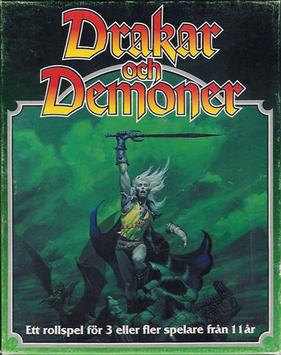
     Dragonbane, published by Free League Publishing, is the current edition of the Swedish fantasy RPG Drakar och Demoner (Dragons and Demons), which was originally based upon Chaosium's Basic Role-Playing (BRP) system. Dragonbane shows some of its BRP roots, but for the most part is its own system. Like BRP, Dragonbane is skill-based, meaning you don't have to deal with the class-and-level setup of Dungeons & Dragons (another old favorite of this grognard).
 
     Characters have professions and can expand beyond the skill set of their starting profession as the player sees fit. The spectrum of professions in Dragonbane runs almost as wide as that of Warhammer Fantasy Roleplay (yet another favorite of mine), including artisans, warriors, mages, thieves, and knights. The one notable absence or exception to the core rules is the lack of a cleric profession, but that is easily handled and will be touched on in a later entry on this blog. 
 

What Exactly is a Zone/Hexcrawl?

           © 2025 Dyson Logos, used under license.          

     Hexcrawl refers to the hexes on the campaign maps which player-heroes travel through. The scale of these hexes range from six miles to 24 miles per hex, depending the map. "Zonecrawl" refers to the fact that instead of using a large world map, the campaign will be using several hex maps created by cartographer Dyson Logos. These may or may not come into play depending on what path(s) the heroes take over the course of the game.
 
     Here's an example by way of my campaign: a blank map of the starting region for the campaign (you can find it here on Dyson's site). As I noted, the scale on this map is six miles to one hex. While it's not very big in terms of an entire world, it's big enough to pack in more than enough adventure (and trouble) for novice heroes. The actual starting map for the players will have some locations labeled. Others will get labels as the campaign proceeds, based on where they go.
 

Rule Zero

     Every ability, spell, profession, variant rule, etc. is subject to change or removal at the discretion of the GM. Even if a game element is initially permitted, if it is later deemed incompatible with the campaign, it will be modified or removed. Any characters (PC or NPC) that use that element will be required to adjust to the change (in other words, no grandfathering). The [GM] will attempt to keep this sort of thing to a minimum (if at all), but sometimes this may happen in the process of keeping the rules appropriate to the campaign setting.

    Some things that may seem like a good idea at one time may turn out to be a bad idea in use. No grandfathering also maintains a consistency with the game setting and prevents people from abusing the letter of the rules if they choose not to respect the spirit of said rules.
 

What Lies Ahead...

     Over the next few days and weeks, I'm going to be posting material regarding house rules for the campaign, elements of the setting (which will evolve as the campaign progresses, making this a living blog/document of sorts). I'll also be posting some write-ups of the characters' (mis)adventures as well as other things regarding Dragonbane. I look forward to adding to this blog and possibly hearing from anybody who happens to read it.